Showing posts with label storytelling. Show all posts

Wednesday, July 27, 2011

"I will always, always, always wasting away the time."

Photo credit: Quiet Delusions
This summer has been one of dabbling--I've been playing guitar, learning to cook a little, and for whatever reason, I've been working on three different writing projects all at once.  Not, probably, the best strategy when it comes to building focus and digging down deep into a story and making it big and real and saleable and full of high stakes and layers and awesome. 

It is, however, a pretty good strategy for getting back to the fun of writing when all that stuff starts to feel a little bit scary and serious.

So one of the projects I'm working on is this fantasy story I drafted a while back--before I had an agent, before I had a book deal.  I drafted it in between two revisions of KISS THE MORNING STAR, and for whatever reason, writing this story was the most enjoyable experiences I've ever had writing.  I love my little trio of heroes, I love the mythology and the magic of my little world, and I love the setting of the story, which is mostly in the real-world city I live.  It incorporates many of the things I love about home--the Lake, the crazy seagulls, and the beautiful stone "castle stage," which has always seemed to me the perfect place on earth to perform a Shakespeare play, and it's where my characters are performing the comedy Twelfth Night.

Anyway, I was reading through all the files of notes and beta comments and early drafts in my folder for this story, and I came across one I had almost forgotten, which was titled "Bonsai Remix".  What craziness I found when I opened the file to see this weird, mix-and-match junk poetry version of my first draft, which...hilarious and nonsensical as it may be, yielded some interesting thoughts and some fun lines.  My hazy memory and a few google searches brought back this funny little bonsai story generator, and I picked out a few silly lines to share with you, including the title of this post, which seemed pretty apt for me, especially perhaps for this summer of dabbling. 

(But sometimes...just sometimes, not "always, always, always"...the "wasting time" is really dreaming and thinking and turning over ideas that lead to a good story.  And sometimes dabbling in an old story to find back the fun of it all is so worth it!)

So here are a few more goofy nonsense lines of my bonsai story...will you share some of yours?  :)


The noise of them!” He laughed at her feet.

She slowed down, still wheeling and she was some serious wtf.
And a little puckering mouths gaping open and snapping closed, each crooning somehow melted together said the “transition apartment” that came with vampires or pacifists or pacifists or reading or anyone who had thrown that way.

Friday, June 24, 2011

The road ahead...

My family has been a bit obsessed with Laura Ingalls Wilder lately.  That's not the point of this post.  But seriously, we seem to be experiencing some Laura-immersion lately, as we read aloud from The Long Winter, look at our photos from the museum in Walnut Grove, and now, we've begun watching the first season of the Little House TV show.  The boys are transfixed.

In the episode we just watched, Pa had to walk a hundred miles to find work, along with many other farmers in the area, after a catastrophic hail storm ruined the wheat crop. On his way, he meets up with another farmer--a man we have just seen in an emotional parting shot with his wife and his son.  The wife begged him not to go; she says he's going to get himself killed.  The parting with the young son is poignant, with the whole, You're the man while I'm gone, so take care of the farm and take care of your mother thing going on.  He's a "powder monkey", we later find out, the guy who sets off the dynamite inside the holes that Pa and another farmer are going to drill in the rocks of the quarry.

I'm sorry to spoil the episode for you, but the thing is, from the moment we see this goofy tough guy with the heart of gold dancing around in mock fisticuffs with his little guy, who declares his father the best powder monkey in the whole country...the moment you see the love in his wife's eyes--her desperation nearly hidden by her playful teasing--you know the dude is going to blow himself up.

Or anyway, you know once you've seen this strategy used a few times.  Just like Keek says in the book I'm currently devouring reading, And Then Things Fall Apart, by Arlaina Tibensky (this quote is from the ARC, so it may differ from the final book), "In movies when there is a dog, I always kind of brace myself for the moment when the dog will eat poison, get shot, get run over, drown, etc.  And then when the dog dies (they always do; that is their function in the film, to die), I weep...."

We start to recognize the signs of impending narrative tragedy: a dog, a cute kid told he has to take care of his mother, a stoic but heartbroken wife, a warning gone unheeded.  We prepare ourselves, emotionally.  And then, even though we know it's coming, still we weep.  We feel sadness, but we aren't completely shocked and horrified by the awful event.  It doesn't actually traumatize us because we knew it was coming.

Laura's writing desk, Walnut Grove, MN
Unless you're a little kid, still learning how to recognize these cues, like Monkey, who was paying attention to the television the way he pays attention to everything--by seeming like he is completely ignoring it.  Suddenly, he's on my lap, weeping, his little bottom lip all stuck out and his eyes gigantic and terrified, watching the smoke from the deadly explosion rise up into the blue television sky.  It's my job, then, to keep him from being traumatized, to hold him and explain about how it's not real life and help him see how brave the little boy is in the end and how Pa promises to check on him and his mother in the future.

This is a confession, though not a secret:  when a book really has me hooked, when I am completely wrapped up in the characters and their lives and their conflicts, when I truly believe in them...when the foreshadowing is subtle but deep, and the suspense builds in the book so that I can't stop turning pages even though I fear to turn another page...

...usually at about the halfway point, when it becomes too much to bear, and I feel myself on the edge of being traumatized, I'll flip quickly to the end of the book and glance at the pages--not to read, but just to sort of reassure myself that life goes on, in the end.  And after that moment, when I get my little reminder that yes, the story will go on, and probably it will be resolved (I don't need a happy ending, but I guess I'm looking to make sure that the rest of the pages aren't empty and blood-stained or something?), then I can keep reading.  And weeping.

And those books stick with me, much more than the ones that I can continue straight through without ever needing to flip ahead to check and make sure my heart won't explode in a few pages.  So...how do I write a book like this, that makes a reader so incredibly invested that they think they might be traumatized if something catastrophic happens in the next fifty pages?

One way, of course, is to write characters that are so three-dimensional and real that I actually can't bear to see their hopes and dreams crushed.  I have to care about them deeply in order for any of this to matter.  But it shouldn't be easy to see what will happen (for example, the "powder monkey" saying good-bye to his wife and child, recklessly he's stuffing those dynamite sticks into his pockets, that moment when everyone seems truly happy and like it all is going to turn out fine...that's too easy.  But that's also a short television show from many years ago and a minor character!).

I can compare it to something else that makes me anxious--driving.  When we were on our trip last week, we climbed up into the Black Hills, to a campground near Deerfield Lake.  The roads there were all steep and winding, breath-takingly beautiful and horribly dangerous.  Snaking around the curves, headed into the setting sun, both David and I leaned forward, squinting through the bug-splattered windshield, trying to figure out which way the road was going to veer next--and sometimes completely surprised at the direction it takes!

But what a satisfying thing, to finally pull into that campsite in one piece...to smile at each other and say, wow, that was a beautiful ride, and we made it to the end!  And how thankful we are that we get to drive back down with the sun at our backs. :)

So how do you build suspense in your writing? What suspense methods do you think work really well?  What authors do it best? What books make you want to flip ahead and make sure the world doesn't end?
Tuesday, June 21, 2011

Road Trippin'

Our campsite at Sage Creek Campground in June, 2000
Very early in our relationship, David and I took a road trip to Kansas to visit my dad.  Later road trips have included a summer-long ramble out West with no firm destination, spending all our time either in the car or the tent, a mad dash from Oregon to Minnesota and back, without stopping for anything but gas and fast food, a road trip with friends up to Vancouver, British Columbia, and various shorter trips all over the place.

We made a lot of discoveries along the way.  We discovered, for instance, that I make a good navigator: ("Okay, so according to these three maps I'm consulting at once, you are going to want to make your way over to the left lane for a left exit in one mile.  There will be two exits off to the left before the one you are looking for.  Once you take the exit, you will take another left, followed by an immediate right.  Not this exit, but it's coming up next. And turn! Now, remember left, followed by immediate right.  YES!  And we're set for the next hundred miles, unless you'd like to stop for something to eat, which can be done in twelve miles, forty-six miles, or possibly seventy-two miles, although information on that tiny town is a bit sketchy"), and that he is not a good navigator ("Yeah! TURN RIGHT THERE!  No, I mean, LEFT, but...yeah...back there.  Um.  Let me figure out how we turn around.")

He is a calm pilot ("No problem, honey, I don't mind being boxed in by giant trucks on a winding mountain road while the rain lashes against the windshield and the lightning makes the world seem like a strobe light disco party.  It's okay that I haven't slept in twenty-two hours and I've had to pee since we were in South Dakota and the whole world looks fuzzy.  You go ahead and take a nap"), and I am not a calm pilot ("HOW THE HELL WAS I SUPPOSED TO GET OVER TO THAT EXIT WITH NO WARNING OMG THERE ARE CARS EVERYWHERE WHY IS EVERYONE GOING SO FAST THEY'RE CROWDING ME WE'RE GOING TO DIE AAAHHHHHH!  *sob sob sob*").

But most of our experiences with road trips ended when we had kids.  Not because we didn't feel confident in our abilities to take kids on a road trip, and not because we were trying to deprive them of the experience of travel but rather because kids are expensive and travel is a luxury, and also because, as a grown-up, vacation time frequently gets used up with things like painting the house or catching up on all the laundry. 

But we finally did it--we put the kids to the test to discover if they were good road trippers, too.  And they are! D. drove the whole way, and while I had additional tools at my fingertips as navigator (GPS...so shiny! and wi-fi capable kindle...so connected!), we still adopted our usual, figure-it-out-as-we-go attitude.  There were a few things we really wanted to see.  One was the Laura Ingalls Wilder museum in Walnut Grove, MN.  We've been reading the Little House series out loud for the last year, and both boys are pretty fascinated by the prairie life.  The museum was excellent, and the hands-on exhibits kept the boys enthralled.

Sage Creek June 2011--a Kiss the Morning Star scene come true!
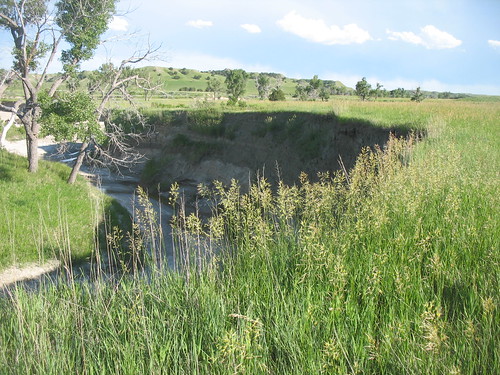
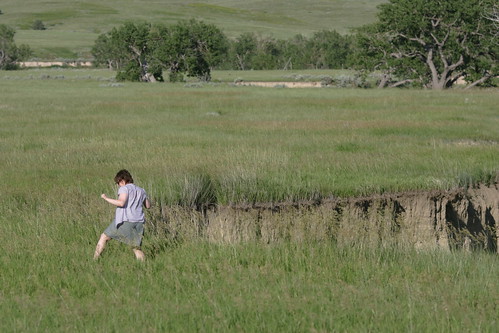
We also wanted to make a stop at the Sage Creek Campground in the Badlands--or maybe I need to say that I wanted this.  This was a place where D. and I camped a million years ago, and I think we had one photo of it from that trip.  But it became more important to me when I was writing Kiss the Morning Star and wrote an important scene that takes place at that campground.  I wanted to see it again, but this time thinking of it as the site of Anna and Kat's adventures.  It wasn't so much that it needed to be perfectly accurate (there are definitely some details that are...maybe we'll call it romanticized!), but I wanted to just...envision them there.  It was really cool, though, to find the perfect precipitous cliff for a key moment where Anna and Kat almost step off the edge of the prairie and fall into a chasm in the dark.  I didn't know if there would be such a place, but then we found this awesome spot.  I had to run over and take pictures, so of course D. took pictures of me taking pictures because we are picture-taking crazy.

Speaking of picture-taking crazy, if you want a closer look at our road tripping experience, I spent like all day yesterday uploading and writing notes on photos, so here's our flickr set from the trip

And now...must get busy on these copyedits!

(And, happy summer! I will try to get back into blogging and reading mode!)

Saturday, March 5, 2011

jabberish interlude...

Jabber:  Yeah, I don't really like grapefruit.  But I like grapefruit juice.

Me:  Grapefruit is basically grapefruit juice.  If you like the flavor of the juice, you like grapefruit.

Jabber:  I like the flavor of the juice, but...it's just not the kind of flavor I like to use my teeth with.

Saturday, February 26, 2011

road trip (and road kill) reflections...

I finished another round of revisions (maybe close the last one?) on Kiss the Morning Star this week, so I'd like to celebrate by sharing a little bit about the road trip that partially inspired the book, a trip D. and I took about ten years ago and which follows much of the same course as Anna and Kat follow on their "rucksack revolution".  We, too, carried some Kerouac in our backpacks, and like Anna, I carried a notebook in which I tried to capture both our actual experiences on the road and also my thoughts about life and love and truth and beauty and all that stuff that seems sometimes easier to think about while I'm speeding along a back road without an itinerary.

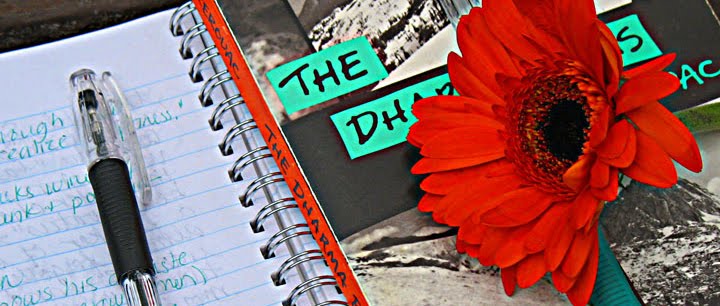
Some of the little details from my old notebook triggered scenes in KtMS, but most of the time, if I tried to put something that actually happened to D. and me on our trip into the book, it ended up not being believable as fiction.  One thing that we have in common with Anna and Kat, though, is the Roadkill Count--a gory list on the back cover of the notebook that documents the dead.  We tried to categorize the animals ("Coon", "Former Flyers", "Brown Furries", "Possibly a Beaver", and sadly, "Collared Critters").  You might be able to see this in the photo (that's my marked-up edit letter and manuscript underneath my notebook, by the way!), but we also wrote a few annotations ("Hit a few times!" "Big one!"), and on this trip we actually added a less morbid "Live Encounters Driving" section which tallies up to almost as many live creatures as dead ones (except one of them says, "Oops, hit this one!").

Several pages of our notebook keep track of the little details of our journey, such as where we spent each of the 77 nights we were on the road, and how much we paid for our accommodations.  We also kept track of every tank of gas we purchased, the price per gallon, and the mileage we got in my heavily loaded 1987 Mercury Grand Marquis, Berta.  The mileage wasn't great, but it is pretty amusing to remember how scandalized we were by the price of gas in certain cities--"It's OVER $1.75 a gallon, what the hell???" 

We also dedicated a couple of pages to silly signs or amusing quotes that we either said or overheard while on the road.  (One of my favorites, written in iridescent pink pen, goes like this:  Elissa:  Oh, it's okay.  I'm just checking to see if I have a live hornet in my pants.  David:  Um.  Maybe you should pull over while you do that?)

Interestingly (to me, haha!), as I flipped through my road trip notebook, I also found--in a completely unrelated part of the notebook that was from before we left--the little character sketch that inspired me to write Kiss the Morning Star in the first place.  The main character of this story was a girl named Harriet, daughter of a minister with a "golden voice."  The story began, "When she was fifteen, Harriet read three books on Buddhism for a research paper in English class.  She learned that life was suffering.  Harriet stood in the shadows between the stacks at the public library, a heavy book in her hands, and thought of her mother, who hated her."

I like being able to trace the origin of this story, and how it has changed and what it has kept--a little bit of Kerouac, a little about her minister father's voice, a little about the tragedy that shapes Anna's journey.  And I like being able to also trace the path of my own journey, so long ago, and to see how it has shaped my writing.  Most of all, I like to think about the experiences of the present, and where they might lead, about ten years from now.   :)

Friday, December 10, 2010

sick day homeschool

So all three of us were out sick today with a creepy, fever-cough flu-thing, so I was lying in my bed drifting in and out of consciousness while the boys were supposed to be "resting" in their bedroom.

Before long, I heard some rather organized imagination play going on.  From the sounds of it, Jabber and Monkey were playing school.

For a while, things went well.  Jabber got out some paper and pencils and labored to teach his brother the art of  proper letter formation.

Jabber:  Oh!  That's a very nice E!  Normally, we only use three lines going across, but you got it facing the right way and everything.

Monkey: *makes siren noise*

Jabber:  Monkey! It's time to do the R!  Come on.  Start with one line down, like this.

Monkey:  WhoooooooooOOOOOOOOoooooooo!

Jabber:  Are you even listening to me?  Monkey!  Monkey.  Come on.  This is serious.  See my R?  See if you can do it just like that.

Monkey:  *jumps up and down*

Jabber: You can't make your R look right while you're jumping.  Please sit down.  PLEASE SIT DOWN!

Monkey:  I did it already!  I'm done!  I'm done! *jump jump jump*

Jabber: (exasperated)  MONKEY.  Where is your paper??

Monkey:  (completely unconcerned comment tossed out in between his enthusiastic gun-shooting sound effects)  Oh, that paper?  I dunno.  I threw it on the floor over there somewhere.

Jabber:  What?  We don't throw our papers on the floor, Monkey.  You have to turn them in to your teacher.

Monkey:  *cackles loudly, interspersed with more gun sound effects*  Well, go pick it up then.  I don't care.  SCHOOL IS BORRRRRRING!

***

Oh, dear.  That is all.

Thursday, September 23, 2010

the devil is in the details

Growing up, my favorite books had nothing in common, on the surface.  I was as deeply in love with the historical feel of Little House on the Prairie as I was with the fantasy elements (science fantasy?) of Mrs. Frisby and the Rats of NIMH, and my favorite book for a long time was this strange paperback my grandma had picked up at a flea market called Charley, or The Girl Who Ran Away--a somewhat bizarre, feverish story about a child living on her own in a chicken coop, crawling through hedgerows and going to Sunday School with dying wildflowers in her hair.

It didn't matter what the book was about; what I wanted was for it to feel so real, so thick with details and rich settings and characters who seemed so entirely believable that I would get wrapped up in the story so tightly that I would forget where I was.  I loved being lost in a book, so far gone the sound of my mother knocking on my bedroom door would make me startle, confused and disoriented in the real world. 

As an adult, that feeling is harder to capture, but to this day, the books that truly amaze me are the books that feel...deep.  Sometimes I think of it as having layers, but other times I think of it like a thick, heavy patchwork quilt.  Every stitch was deliberately placed by hand. Every scrap of fabric has a history you can hear if you're still, if you study it long enough.  There are varied textures and funny smells and a weighty, comfortable feeling in your hands, on your lap.  And when you put it down, set it aside, there's a little moment of longing--a sad little shiver.

I want to write a book like that.  I do.  I'm trying.  But man, does it ever take a long time!

All this was sort of a lead in (or it was supposed to be, anyway) to talk about how I read through the first draft of my Cassandra WIP and scribbled notes about every other paragraph that said, "GO DEEPER HERE!" and "EXPAND THIS!" or "SLOW DOWN AND GIVE THIS SCENE A CHANCE!"  It feels so thin, so very far from that heavy quilt.  It's not even one of those double-layer fleece blankies with the fringes on the edge--the kind anyone can make, provided they can operate a pair of scissors and tie a simple knot.  This book is like...maybe a flannel sheet.

So almost everyone in my online writing group has at least attempted to do literary agent Mary Kole's 100 Declarative Sentences exercise to flesh out characters or settings.  I'm not sure if anyone has actually made it to one hundred, but even so, we've all discovered some useful tidbits about our characters in this way.  I made it to 45 sentences about Cass while I was writing the first draft, which was super helpful.  Some of the sentences actually helped me keep details straight as I was writing, like this:

14.  Cassandra has a sister Dicey, age 15; a sister Lexie, age 8; and a brother Eric, who is eleven months older than she is and will turn 18 at the end of this month.

So mainly, that kind of sentence helps me keep my continuity.  I have a hard time keeping track, for instance, of what color eyes and hair my characters have, or like, if I mention at one point that eating cheese gives them hives.

Other sentences end up telling me more about the character--sometimes giving little bits and pieces of their past lives that may not actually end up in the book, but which may give that bit of different texture to the patch that makes up that place in the quilt.  I learn things about them, like this:

22.  Cass has a vague desire to be a scientist when she "grows up", but she's worried that this is a little too nebulous...what do scientists actually do, in the real world?  She pictures herself in a lab coat, bending over beakers, but...doing what?  All the pictures in her head come out of that old biography of Marie Curie she read for a report in fourth grade.

Now, on my second draft, I'm making sentences for Darin, and Drew, and maybe even Kayla.  So far I'm on Darin number 24, and it's hard, but I've already got some notes in a different colored pen next to "EXPAND THIS!" and "GO DEEPER HERE!"  My favorite discovery is the first moment he ever noticed Cass:

15.  Darin noticed Cass for the first time on an eighth grade field trip to the underground mine.  Something about her face when the tour guide mentioned the underground physics lab reminded him of Meg Murray from A Wrinkle in Time, and he daydreamed a bit about traveling with her through space and time.  Or at least sitting close to her on tall stools, their heads bent together over a Bunsen burner.  He lagged behind the group for the rest of the tour, his mind far away.

So here's hoping that by the time I finish this draft, this story will have a little stuffing!

Friday, August 13, 2010

because someday soon he won't let me post these stories...

Monkey is upstairs on the potty.

Me: How you doin' up there, Monkey?

Monkey: DON'T SAY THAT.

Me: What should I say?

Monkey: SAY, 'HOW ARE YOU DOING UP THERE?'

Me: How are you doing up there?

Monkey: DON'T SAY THAT!

Me: What should I say?

Monkey: SAY, 'HOW ARE YOU DOOOOOING UP THERE?'

Me: How are you doooooing up there?

Monkey: DON'T SAY THAT!

Me: Well, what should I say???

Monkey: SAY, 'HOW ARE YOU DOOOOOING UP THERE, BUTTHEAD?'

Me: I'm not going to call you a butthead.

Monkey: FINE. THEN JUST GET UP HERE AND WIPE MY BUTT INSTEAD.

Thursday, August 12, 2010

don't get a big head

Monkey: (grins) I'm growing!

Me: Yes, yes, you are.

Monkey:  (grins even wider) I'm going to be big as Daddy soon!

Me:  (grasps at good parenting opportunity)  Yes, someday...that is...if you go to bed nicely every night.

Monkey:  (grin fading)  But MOM.  Is my head going to grow, too?

Me:  Well, yes.  All of you will grow.  You'll be in proportion, don't worry.

Monkey:  (horrified look)  BUT I DON'T WANT MY HEAD TO GET BIGGER!

Me:  (pointing at David)  Look at Daddy, though.  Wouldn't he look silly if his head were little but the rest of him were big?

David:  It happens to some people, you know.

Me:  It won't happen to you, Monkey, don't worry.

Monkey: (wailing and pressing his hands to both sides of his head)  I DON'T WANT TO GET A BIG HEAD LIKE DADDY!  I DON'T WANT TO LOOK FUNNY.

(yes, this is a cheater post.  no, it has no point.  yes, I'm editing like crazy.  no, I'm not getting a whole lot done with these charming and hilarious children around.)

Saturday, June 26, 2010

on pretending, or I LOVE WRITING!


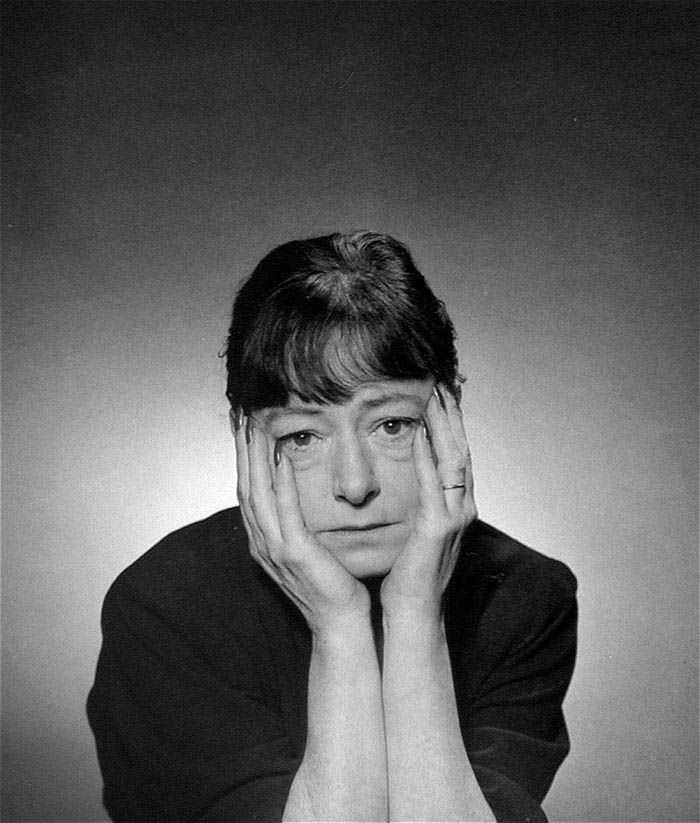
"I hate writing.  I love having written" --Dorothy Parker

Yesterday, during our afternoon quiet time, Jabber decided to sit beside me and write his own book.  For reasons that are long and a bit inane, I have been referring to his book by the title A MILLION FLEAS.  He calls it PEPOL TRAPT IN A CAR.  I mean, it's a working title.

So yesterday he wrote a chapter ("The Car Rase") which, although tending toward bathroom humor, seemed a pretty good start.  He even made his own cover (I'll break it to him later how little control he'll have over cover design...) and did some illustrations (mini-van with flames).

Today during quiet time, I asked him if he was going to write chapter two ("The Jet Pac") while I was working on my Cassandra WIP.  He shook his head.

"No, I hate writing," he said.

"What?  Yesterday you loved working on your book with me."

"No, Mom.  It wasn't really fun.  I was just pretending it was fun."  And then he just...abandoned his WIP.  Such a promising premise, too!  (All right, I'm not entirely clear on the premise, but I feel sure he could have made it into something wonderful.)

At first, I was kind of upset--not that he didn't want to finish some story he was working on, but because he has been claiming today that he hates reading and writing.  That kind of broke my heart a little bit.

But then I realized--yeah, sometimes we all hate writing.  And a lot of the time the actual act of writing...well, it's not all that enjoyable.  Now, don't get me wrong.  I love having written.  I love to reread it.  Sometimes I even like to revise it.  But writing isn't easy, and it isn't something that, for me, just flows like water, like breathing.  It isn't always fun.  But even so, I keep doing it, and in fact, I feel wrong if I'm not doing it, even though I will at times go to great lengths to avoid doing it.  At other times I'll do it, but only for the promise of rewards: if I write a thousand words, I get to shower.  If I write another thousand, I can eat.  Does that sound like fun?

So, I know there are writers for whom writing is always a source of pure joy.  I know there are others who always find it a struggle and have to drag themselves to the page.  And others have the sort of complicated relationship with writing that I do--I love it but I dread it.  When I'm not writing, I long to be, and when I'm supposed to be writing, I'll scrub the kitchen floor to get away from it.

How about you?  Is writing fun, or do you just pretend that it is?  And wherever you fall on that spectrum, what's your favorite part of the process?

Wednesday, June 9, 2010

the shame that sticks

It's the end of the school year, and it seems every time I open my mouth to speak to a student, something sappy comes out.  I'm awkward with goodbyes, with telling the kids how much they mean to me, but at the same time I want them to know.  Middle school is such a crazy time--I want to somehow tell each student all the good things I can see underneath that rough exterior.  I want to give them these words to remember, encase them in glass, like a keepsake they can take out and study at some point in the future when they think back about their middle school teachers, something positive to block out that one time I gave them an exasperated sigh or maybe even a bitingly sarcastic comment. 

It's funny, though.  No matter how carefully I choose my words, it's unlikely those will be the ones they remember.  I'm well into my third decade of life, and although my memories of elementary, middle, and high school are a bit blurry overall, there are these moments that are as clear to me now as the moment they happened.  Clear as though they were encased in glass, actually.  And I would venture that, of the memories involving teachers, none of them are moments that those teachers really wanted me to keep. 

My clearest memory of kindergarten is a sulking glimpse of my class playing "Skip to my Lou" from my spot behind the cloakroom door, where I had been sent after I had demonstrated a karate kick which resulted in my little brown oxford shoe flying off my foot.  "We don't kick our shoes at people," my teacher said, and to this day I can feel a sense of burning injustice and shame.

I have lots of memories of second grade, but two of the most vivid also involve shame, or at least morbid embarrassment.  Looking at them from my grown up angle, I'm sure they were completely unintentional on the part of my lovely teacher, but at the time, I wanted to curl up and die.  One was pretty common for me--I never could shut up, and my teacher chastised me in front of the class for talking to my friend Mark, except she hinted that there was a romantic bent to our purely platonic (and, if it's possible for two second graders, purely intellectual) yet nonstop conversation.  I remember Mark's ears were a deep shade of red, and I thought I'd never forgive her for embarrassing me like that. 

The other memory was about my school picture.  It was ugly.  Or rather, I was making a very weird face in it.  I can actually remember the entire sequence of events with the photographer, how he patronized me and how I made a dumb face at him because I wasn't good at hiding my disgust with adults when they were stupid.  But the embarrassing part was when my teacher got the proofs for the photos and said to me, in front of the class, "Elissa, come up here and look at your picture.  You want retakes, right?"  For some strange reason, this mortified me--that she would tell the whole class that my photo was ugly, basically.  I flounced up to her desk, took one brief look at the photo (with my vision all red as I'm sure my face was as well), and declared, "I like my picture.  I meant for it to look that way."

That was a complete lie, of course, and at the time I had no idea why I even said it.  The next week or whatever when I got my pictures, I was too shy to go back up and ask her to get retakes.  Too proud, maybe.  So to this day, my second grade picture features a smart aleck girl making a weird smirking face that shows her complete contempt for the photographer.  And every time I look at it, I remember that moment of flouncing up to her desk.

There are  more of these memories...many for each year of my schooling.  These are my mildest moments of shame; I'd feel bad writing publicly about the ones that hurt the most--the ones that still sting now instead of making me laugh, as these do now.  It's possible I'm just very sensitive to being embarrassed, but I would guess that I'm not alone in this, that many people carry with them the memories of those small shamings.

Right now, the boys and I are reading the Ramona Quimby books out loud at bedtime, and so many of the events in Cleary's books are about moments just like the ones I remember.  As we read, we laugh at the image of Ramona, always misunderstood.  We can relate to those moments.  And I can only hope a few of the other moments stick, too, the ones that let my students know that I care.

Tuesday, June 1, 2010

eyes on the prize (and off the canoe rack)


Jabber is learning to ride a bike.  A real bike.

"With no training wheels," he says.

So the boys get out the toolbox and dismantle the second-hand bike we got him last summer, and soon he's wobbling across the back yard, back and forth, more feet on the ground than are strictly allowable for actual bike riding but with a lot of bravery.

I take a video or two, and at the beginning of each "take", Jabber solemnly speaks to the camera.  "Riding a two-wheeler is easy, once you get into it," he says, and then staggers off across the bumpy green expanse, grinning a big boy grin.

I learned to ride a bike when I was six--a red, banana-seat bicycle with a white plastic basket and a little silver bell with an American flag on it (which I've mentioned before).  My stepdad figured it would be easier for me to learn with a little hill to get me started, so he took me to the spot where the driveway rambled down the peninsula toward the lake, the gravel turning into grassy ruts.  "Just keep your head up and pedal," he said, giving me a little push.

At the bottom of the hill, near the beach on the left-hand side of the path, there was a giant wooden canoe rack.  I think there was a canoe or two or three hanging on it...that part is fuzzy.  All I remember is that I was terrified of crashing into it.  It loomed in front of me, and I couldn't take my eyes off it.

So of course, I crashed into it.  Hard.  Picking me up from the dust, checking me for more serious maladies than the ever-present skinned knees and assorted bruises, my dad told me it was time to try again.

"But I'll hit the canoe rack," I cried.

"No, you won't.  Just steer away from it."

But every time I went down the hill, I found myself transfixed by the canoe rack, inexorably drawn to it until I was painfully tangled up in it.

My dad was frustrated, but he didn't know what to do except to tell me to steer.  How could I steer, when that gigantic, painful obstacle stood right in my way?  (except, it wasn't in my way at all; it was way off to one side of the harmless grassy path my bicycle was supposed to take...)

Finally, crying and ready to give up, I explained how my bike just gravitated toward the canoe rack, and Randy taught me the trick of bike-riding:  you will always go where you look.  "Look away," he said. "Keep your eyes on the path."

Magic.  I sailed down the road (okay, okay, I still crashed, but not into the canoe rack; that's the important part.)

I've said it before, about writing...there are so many ways to fail, so many reasons to give up, to keep your eyes locked on that scary canoe rack.  To crash.  To get hurt.

I'm not one who believes that positive thinking is a magic spell that will lead to my success, but there's something to be said about keeping my eyes on the prize and off the canoe rack, about setting goals and pedaling toward them.  When I have my gaze fixed on the things I fear, it can feel like I'm hurtling toward them, out of control.  A voice in my head tells me to steer, but how can I, transfixed by the giant failure in front of me (or maybe it's really off to one side, completely off my path)? 

My book is out in the world.  I'm trying to look in another direction, trying to fix my eyes on a grassy path.  Trying to wrap up the school year and plan for my summer and keep my house from smothering us all in its filth.  Trying to keep pedaling.

Last night Jabber braved the alley.  There's a little hill, a long straight stretch.  Rows of garbage cans.  He's brave, much braver than I was at six, and he took off without a push, without any directions from me.  Still, I shouted after him.  "Keep your eyes straight ahead, Jabber!  Keep looking forward!"

He rode straight down that alley, just like a pro.