Showing posts with label book thoughts. Show all posts

Tuesday, July 12, 2011

practice makes...well, persistence, for one thing. and probably improvement.

my second loaf of homemade bread, better than the first
I used to be a sandwich artist.  Back when the bread had a u-shaped notch in it and there were no cucumbers or spinach or avocados or even a choice of cheeses.  So when I first started, everything was a mystery--slicing tomatoes was clumsy and a bit dangerous, cutting a pan of bread took me an hour (and six bandages).  But as with most learned skills, practice made perfect--or at least, practice made pretty good and pretty efficient and pretty predictable. 

Writing is...a little different.  My hands could learn the best way to pick up the precise amount of lettuce to spread on a footlong sub for a perfect sandwich, but there isn't a formula for writing a novel, or even for getting a first draft written.  Writers talk about being "plotters or pantsers", they talk about outlining, they talk about fast-drafting and taking it slow.  They write out of order or they write only after six years of intensive research and planning.  They write on napkins, or post-its, or in longhand with a sparkly gel pen.  They write a first draft that sounds like the author talking to himself about what the book will eventually be.  They write crappy first drafts, comforting themselves that they can fix all in revisions, or they write with great care, hoping to not waste their time writing unnecessary words in their first drafts that will later be cut.

And however they do it, a writer gets a novel written.  It might be brilliant.  And the next time they do it--same process, same everything--it might not work at all.  In fact, the only thing that might work for that next book is to do things in a completely opposite way.  It's anything but predictable.

From here on I have to get personal.  I can't pretend that I can tell anyone how to write a book or what the best writer's process is because the truth is?  I don't even know what my own process is.  It changes with every book I write.  And while it can sometimes be scary and frustrating because...um...aren't I getting any better at this by now????...it can also be exciting and gratifying because...um...I get so bored with jobs that are the same all the time!  That pan of bread that took me a an hour and six bandages to cut later took me five minutes with my eyes closed.  But it also took all the joy and beauty out of my life forever.  (Okay, hyperbole aside, that's not even true.  I love the smell of fresh bread and I also like knives...but my point is repetitive jobs kill my soul.)

So.  Let me tell you about my processes for some of the books I've written.  My first novel took me six years to write.  (Actually, I'm really fuzzy about dates because I gave birth to two children in that period of my life and probably didn't sleep for more than three consecutive hours at any point, but yeah, it was like six years from start to finish.  Ish.)  The novel was a book for adults about a woman who is learning to paint but finds herself only able to paint pictures of public restrooms.  Stop judging.  I only pitched it like that once or twice.

Anyway, for that book, I knew my character.  I spent, oh, fifty-some pages getting to know her.  I had an idea of what might happen in the book, but I'd get to that later.  Every day, I revised everything I had written up until that part, and then I'd go on and write another page or two.  It was sort of like I was writing by the seat of my pants, and that was exciting, but the whole time I knew exactly where it was leading.  I knew the climax of the book, and I knew how it would end.  I can't actually remember how much it changed from that original vision, and I can't bring myself to read it to find out, but really, it doesn't matter.  Having the ending in mind was what allowed me to pull through the book to the end.  And finishing that draft was the miracle moment--the accomplishment that assured me that I could write an actual book, the accomplishment that still reassures me every time I sit down to write--I can end this!  Except.  It was messy and unwieldy.  Was there a plot? Maybe, if you squint.

My second book, about a boy who steals his history teacher's car, was like...I planned that book out within an inch of its life.  I had a notebook filled with plot diagrams, and I knew every scene and how it would lead to the climax and then what would happen afterward.  I wrote the first draft in less than a month, and the pace was like a race car flying along.  Writing a book has never felt easier. So I was like, OH OKAY! From now on when I write a book I need to know everything that happens, and it will be so much easier and better!  Except.  Later I realized that the book was so thin...it felt like I could still see the little plot diagram there beneath the surface.  Also I hated the simplicity of its themes and how...direct it was.  Back to the drawing board, process-wise.

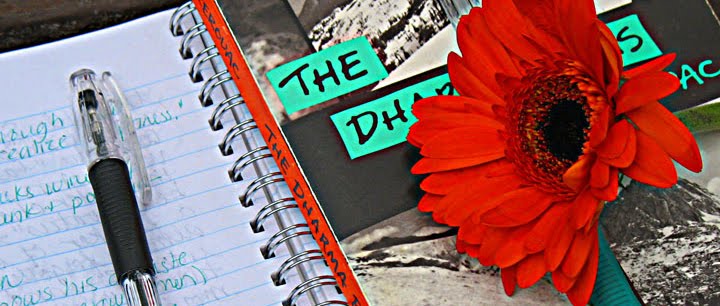
I wrote another book.  This one, at that time called The Dharma Bum Business, but now known as KISS THE MORNING STAR!  Yay, happy little book!  I took about nine months to first draft this, and it was a wonderful and frustrating experience.  I knew I wanted a strong plot structure, but I also knew I wanted layers and depth and emotional connections and complex themes and gray areas and also there was this little problem with my characters who absolutely wouldn't do anything I intended them to do and did absolutely everything they could to surprise me on the page so that I scrambled to align the ending I envisioned to their journey.  I ended up writing three very different endings for the book--vastly different from each other--so different I can't even imagine how I got from one ending to the other without hopelessly unraveling the whole story.  And then I changed the point of view.  I've cut so many scenes and added so many others from the first draft...I've changed the geographical path of Anna and Kat's road trip by about a thousand miles.  It wasn't easy, but it was totally worth it...and it taught me a million lessons about writing that I hope I'll be able to remember for every other book I write.

I've written two more complete first drafts and two more partial works-in-progress since then, and I have to say, my process has changed--I still spend some time plotting and scribbling notes and noodling about with character voices and researching before beginning a draft, but I have less of a focus on what exactly happens and more of a focus on the emotional journey of my characters, the stakes and the conflicts they face, and what parts of their struggles are universal and will resonate with readers.  I've started writing a pitch before I get too far in, to sort of sell the idea to myself, and to focus on the concept--what I'm trying to say.  I write some parts fast and some parts agonizingly slow.  I write a lot of so-called "unnecessary" words--words and scenes and whole chapters I will hack from the manuscript at a later date--and while it may seem inefficient (and I hope to get better at figuring out where my story really begins, for example), for me, I think writing those words really is important, even if it's not necessary for anyone to ever read them.  I'm getting a tiny bit better at figuring out which of the words in my book are those words, too.  A tiny bit. 

I can't predict the exact process that will help me arrive at a perfect sandwich first draft, but I'm getting better at figuring out the things I need to know before I start and the things I'll figure out as I go...the questions I should ask before I begin and the questions that will keep me moving on to the next scene...the times I should write fast and sloppy, trusting revision to fix it later, and the times I should go back and fine-tune some of what I've already written in order to make it feel worth it to go on...the times when I should follow my characters into unexpected places and the times I need to wrestle them back onto the plot diagram.

And I hope that, even though I can't write a first draft with my eyes closed yet (or indeed, without needing multiple bandages, but that's just because I'm a klutz), I am improving.

How about you?  Do you first draft with the same process, or is it messy and evolving, too?  Do you plot or go by the seat of the pants?  Do you need to know the ending or do you let the events unfold?  What questions do you need to know the answer to before you begin? 

Sunday, July 10, 2011

two quick lovely things...

I just wrote an actual real post about writing, but I'm scheduling it for Tuesday because I want to let it simmer in my head a little while longer and because Tuesday is sort of the day I typically post when I actually typically post, which I know, I know, I'm not stellar about being typical or scheduled or anything of the sort.

But.  Real post about writing--the process of creating a first draft--coming Tuesday.  And in the meantime, I wanted to shout from the rooftops how excited I am about two cool things.

One, this book:

A Need So Beautiful, by Suzanne Young
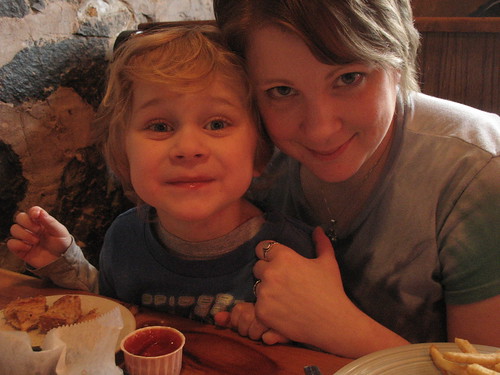
Um. never mind the weird face I'm making, okay?  I'd take a better photo but that would involve me taking a shower, and then I'd probably never get any writing done during these few brief hours that I have the house to myself.  I love Suz, and I loved this book.  It had a great pace, a sexy and refreshing love story, a unique concept, and more than anything else, I connected with Charlotte--I put myself in her place and wanted to know what I would do in her situation; I could feel her pain and her temptation and her indecision and her sadness...and I cannot wait for the sequel.  Especially after the very last chapter, aaackkk!

The second really cool thing was that yesterday I had the exciting chance to go down to Hamline in St. Paul and hear my agent, Sarah Davies at Greenhouse Literary give a talk about taking a story from ordinary to extraordinary, a concept that anyone who reads the stories she writes on her blog knows she has a good handle on.  And then I got to meet her for the first time (she didn't recognize me right away--I am much taller in writing!), and I left all inspired and impressed and informed...couldn't stop smiling all evening.  :)  Here we are on the Hamline campus, shortly before D. and I sprang her from campus for a tiny jaunt to a Dunn Brothers Coffee shop and some nice conversation.


Thanks, Sarah, and I hope next time you make it to Minnesota, you can see a little bit more of our awesome state!

Tuesday, June 28, 2011

out of my computer...and into the world!

So last week I got my copyedits.  I actually got them in the mail the day before we left on our little trip, and I was a bit worried that they wouldn't arrive before we left, and I'd have this mess of dealing with getting them back from the post office or whatever, but then  HURRAY! they came right on time, looking only slightly...battered.  :)

The outsides were intriguing enough!  (I love getting mail, real mail, in my mailbox...brown paper packages tied up with string, you know!)

But then!  Inside!  My manuscript!  With pencil marks and a post-it from Michelle Andreani at Marshall Cavendish, who READ MY BOOK! (and, at one point...I'm not going to spoil it for you because that's how nice I am, she MAY have written the word Lovely.  LOVELY!)  Read my book super carefully, too, like...did you know I have a character named "Norman Whatshisface"?  Did I know I had a character named "Norman Whatshisface"?  Well, Michelle does.  She also knows that, despite the fact that I had it written BOTH as one and two words in various places in my manuscript, earlobe is one word.  And bandanna has TWO N's.  And so many words either have hyphens that I did not use, or don't need the hyphens I did use...and also she kept careful track of when I capitalize the word "god" and when I do not (it was confusing!)

You know what else was awesome?  Michelle (my new bff) used a colored pencil to mark all the changes and suggestions and questions and typesetting marks.  And do you know what color she used?  My favorite, of course.  (This would be purple.)  So my mistakes were even aesthetically pleasing!

All these little excitements, though, were really nothing in comparison with the thrill of marking changes on the physical paper, thinking--this is it.  From here on, my story exists outside of my computer file.  (No, I did not go through my computer file and make the changes.)  At my editor's suggestion, I read through the entire manuscript out loud, and as I read through each sheet and made neat, upside-down pile next to my desk (I feel like I should have Michelle look this over--does upside-down have a hyphen???), the words were getting closer and closer to being an actual book.

An actual dream come true.  :)

Friday, June 24, 2011

The road ahead...

My family has been a bit obsessed with Laura Ingalls Wilder lately.  That's not the point of this post.  But seriously, we seem to be experiencing some Laura-immersion lately, as we read aloud from The Long Winter, look at our photos from the museum in Walnut Grove, and now, we've begun watching the first season of the Little House TV show.  The boys are transfixed.

In the episode we just watched, Pa had to walk a hundred miles to find work, along with many other farmers in the area, after a catastrophic hail storm ruined the wheat crop. On his way, he meets up with another farmer--a man we have just seen in an emotional parting shot with his wife and his son.  The wife begged him not to go; she says he's going to get himself killed.  The parting with the young son is poignant, with the whole, You're the man while I'm gone, so take care of the farm and take care of your mother thing going on.  He's a "powder monkey", we later find out, the guy who sets off the dynamite inside the holes that Pa and another farmer are going to drill in the rocks of the quarry.

I'm sorry to spoil the episode for you, but the thing is, from the moment we see this goofy tough guy with the heart of gold dancing around in mock fisticuffs with his little guy, who declares his father the best powder monkey in the whole country...the moment you see the love in his wife's eyes--her desperation nearly hidden by her playful teasing--you know the dude is going to blow himself up.

Or anyway, you know once you've seen this strategy used a few times.  Just like Keek says in the book I'm currently devouring reading, And Then Things Fall Apart, by Arlaina Tibensky (this quote is from the ARC, so it may differ from the final book), "In movies when there is a dog, I always kind of brace myself for the moment when the dog will eat poison, get shot, get run over, drown, etc.  And then when the dog dies (they always do; that is their function in the film, to die), I weep...."

We start to recognize the signs of impending narrative tragedy: a dog, a cute kid told he has to take care of his mother, a stoic but heartbroken wife, a warning gone unheeded.  We prepare ourselves, emotionally.  And then, even though we know it's coming, still we weep.  We feel sadness, but we aren't completely shocked and horrified by the awful event.  It doesn't actually traumatize us because we knew it was coming.

Laura's writing desk, Walnut Grove, MN
Unless you're a little kid, still learning how to recognize these cues, like Monkey, who was paying attention to the television the way he pays attention to everything--by seeming like he is completely ignoring it.  Suddenly, he's on my lap, weeping, his little bottom lip all stuck out and his eyes gigantic and terrified, watching the smoke from the deadly explosion rise up into the blue television sky.  It's my job, then, to keep him from being traumatized, to hold him and explain about how it's not real life and help him see how brave the little boy is in the end and how Pa promises to check on him and his mother in the future.

This is a confession, though not a secret:  when a book really has me hooked, when I am completely wrapped up in the characters and their lives and their conflicts, when I truly believe in them...when the foreshadowing is subtle but deep, and the suspense builds in the book so that I can't stop turning pages even though I fear to turn another page...

...usually at about the halfway point, when it becomes too much to bear, and I feel myself on the edge of being traumatized, I'll flip quickly to the end of the book and glance at the pages--not to read, but just to sort of reassure myself that life goes on, in the end.  And after that moment, when I get my little reminder that yes, the story will go on, and probably it will be resolved (I don't need a happy ending, but I guess I'm looking to make sure that the rest of the pages aren't empty and blood-stained or something?), then I can keep reading.  And weeping.

And those books stick with me, much more than the ones that I can continue straight through without ever needing to flip ahead to check and make sure my heart won't explode in a few pages.  So...how do I write a book like this, that makes a reader so incredibly invested that they think they might be traumatized if something catastrophic happens in the next fifty pages?

One way, of course, is to write characters that are so three-dimensional and real that I actually can't bear to see their hopes and dreams crushed.  I have to care about them deeply in order for any of this to matter.  But it shouldn't be easy to see what will happen (for example, the "powder monkey" saying good-bye to his wife and child, recklessly he's stuffing those dynamite sticks into his pockets, that moment when everyone seems truly happy and like it all is going to turn out fine...that's too easy.  But that's also a short television show from many years ago and a minor character!).

I can compare it to something else that makes me anxious--driving.  When we were on our trip last week, we climbed up into the Black Hills, to a campground near Deerfield Lake.  The roads there were all steep and winding, breath-takingly beautiful and horribly dangerous.  Snaking around the curves, headed into the setting sun, both David and I leaned forward, squinting through the bug-splattered windshield, trying to figure out which way the road was going to veer next--and sometimes completely surprised at the direction it takes!

But what a satisfying thing, to finally pull into that campsite in one piece...to smile at each other and say, wow, that was a beautiful ride, and we made it to the end!  And how thankful we are that we get to drive back down with the sun at our backs. :)

So how do you build suspense in your writing? What suspense methods do you think work really well?  What authors do it best? What books make you want to flip ahead and make sure the world doesn't end?

Wednesday, April 20, 2011

yum! my first paycheck...

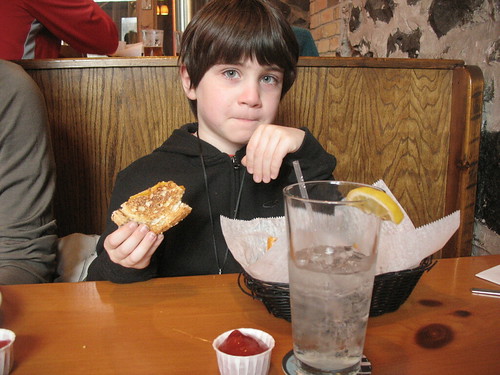
At the midpoint of my spring break, which I've also designated a writing-free break, I took the family out to our favorite brew pub for dinner to celebrate depositing my very first advance check into our (previously nonexistant) savings account.  Monkey was simply thrilled to have his "vewy own KNIFE!"


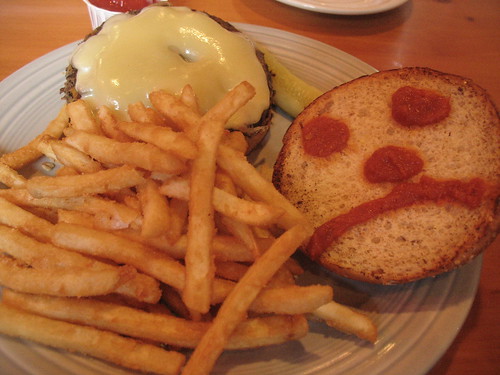
Strangely, my wild rice burger had a sad face made up of chipotle sauce.  Maybe because I ordered it without the pile of fried onions?  The sadface was a bit counter to our purpose there, but we said a toast and clanked glasses of "Daddy Pop" (and draft orange cream soda--yum!) and celebrated being a "real" writer.

I said, "Thank you, family, for being flexible with me so that I had a chance to write this book," and Jabber looked up from his new copy of the second Diary of a Wimpy Kid to say, "Whaaaat?  You wrote a book???"  I guess he thought I was just playing tetris all this time at the computer?

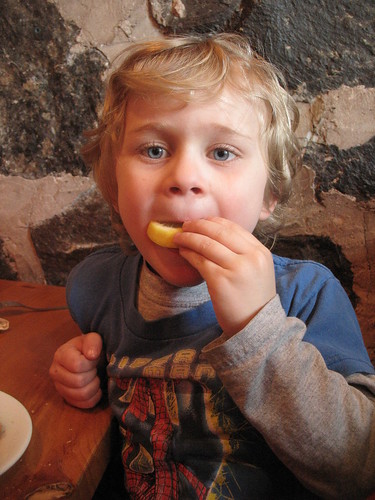
Monkey gleefully requested the slice of lemon that balanced on the rim of Jabber's glass, and then he took huge bites of the sour fruit like he has since he was just a tiny baby, pausing in between each bite to shudder comically, his little mouth twisting up into a pucker.

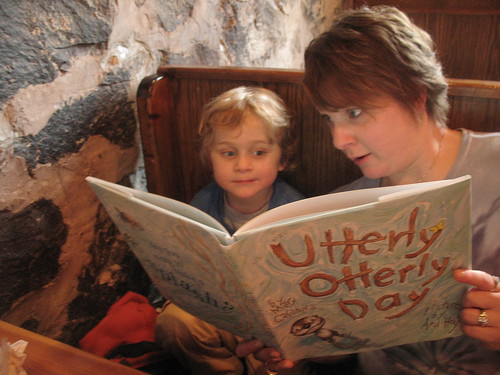
We made a stop at our favorite bookstore (The Bookstore at Fitger's) for some new picture books (and to feed Jabber's Wimpy Kid addiction), and we read the wonderfully onomatopoetic and alliterative Utterly Otterly Day, by Mary Casanova, while we waited for our food to arrive. 

(Yes. I am making a very strange face there.  Not to spoil the book, but there is a rather frightening scene involving a cougar!)


Now I'm going to go back to reading (Fury of the Phoenix by Cindy Pon and Invincible Summer, by Hannah Moskowitz), playing guitar (mainly two Brandi Carlile songs about seven times slower than she plays them), and watching old movies I've somehow never seen (last night was Poltergeist--great fun!)

I'll start on the schoolwork on Sunday night, as usual, and next week will be back to business in the home stretch to summer. 

Saturday, March 26, 2011

readaloud ruminations

I love to read aloud.  In fact, most of the people who have spent any time with me have probably heard me read to them--"Listen to this," I'll say, and read a bit from whatever I'm in the middle of.  I read to my students; I read to my children every night: Sharon Creech's Ruby Holler, Beverly Cleary's Ramona series, Judy Blume's Tales of a Fourth-Grade Nothing, and all of the Laura Ingalls Wilder books.

On many occasions I've read aloud to D. as well, like when we read all of Douglas Adams' Hitchhiker's Guide series or when we finished Neil Gaiman's Stardust on the edge of Lake Isabel in Glacier National Park, pausing in between paragraphs to bang our sticks together to keep the bears on the other side of the lake from wandering over to sample our peanut butter tortillas.

I read on road trips--the hour between home and the grandparents' place is  frequently filled with the sounds of Cornelia Funke's The Thief Lord and Inkspell or Robert C. O'Brien's Mrs. Frisby and the Rats of NIMH.  I even read aloud when I'm all by myself--either from my own works in progress or from published authors, especially poetry.  All poetry gets read aloud.

I read to my students--delivering Old Major's dream speech from Orwell's Animal Farm and Jacques' "All the world's a stage" speech from Shakespeare's As You Like It.  Some of my favorite moments in homeroom are the times I have read to them: for my sixth graders the light and whimsical prose of Katherine Hannigan's Ida B. and the endearingly earnest voice of Addie from Leslie Connor's Waiting for Normal, and my eighth graders enjoyed the heavier themes of Laurie Halse Anderson's Speak.

Maybe I just like the sound of my own voice--it's certainly possible.  But what I love about reading the words of a wonderful author aloud is the music of it, the way the words fall into a beautiful rhythm.  I love to capture that music, or at least to try, to embrace the beauty of dialogue, of a well-placed pause.  And, okay.  I like to have an audience. It's the drama geek in me.

In college, I studied Spanish, and I read almost all of the assigned readings aloud, practicing my accent, enjoying the musicalidad of the words, the way the phrases would almost dance with each other on my tongue.  I think reading aloud not only improved my Spanish-speaking skills, but also my "ear" for the language, and the same can be said for reading aloud in English.

Reading the words of great writers influences my own writing, and hearing them spoken--paying attention to the sound of the words as well as their meanings--inspires me to work toward that same sense of rhythm and...even pitch, it seems, that my favorite authors achieve.


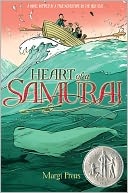
Another thing I love about reading aloud, especially with my kids, is that sense of being able to share what I'm reading with someone else, to hear and see and share their reactions.  When Jabber and I read Kate DiCamillo's Because of Winn-Dixie, we read the last four chapters with our arms wrapped tightly around each other, squeezing tight so we could feel the story together.  I love encountering new words, learning about different times, and places, and the great discussions we get into (even when they're silly, like my sons' fits of giggles that resulted from reading about how Margi Preus' protagonist has to try to drink his own urine to survive on Bird Island, in her Newbery Honor book, Heart of the Samurai, which we're in the middle of reading right now.)

What about you?  Do you have favorite readaloud books, or memories of reading aloud from childhood (yours, or a child you have read to)?  Do you read your own writing aloud to hear the rhythm of the prose, and if so, do you think it helps?

Monday, January 3, 2011

Books!

I kept a little list of all the books I read last year.  Seventy-nine books total, which is more than my goal of fifty.  It has been my aim for the last few years to start reading more intentionally--to actually seek out the books for a purpose instead of randomly reading the books that fall into my lap from the universe, and I'm happy as I look down my list to see only a small handful that feel like a waste of time.  Quite a few of them were chosen specifically because I thought I could learn from them as a writer and as a human, and quite a few of the others were chosen because they were enjoyed by people whose taste in reading I trust.

It really does seem like a lot of books, even if it makes me a bit sad that quite a few of them have already gone missing off my bookshelves at school (Saint Iggy, So Many Boys, Linger, Notes from the Teenage Underground, Full Tilt, Two Way Street, and Jellicoe Road, off the top of my head...I'm sure some will resurface as the year goes on, but it always is a little heartbreaking to see how many of my books never make it past the first reader.)

There are some really good books on this list, books that have stayed with me, books I've recommended and booktalked and pushed into people's hands.  Books that have forged connections between me and other authors.  Some of these books are printed and on the shelf, and some still only exist in document form.  Some have created happy moments of discovery for my children (*snuggles Ramona*), and some have caused a few raised eyebrows (like when I was reading Naked Lunch while getting my hair colored...)  Some have kept me up at night reading feverishly (um, Diary, Full Tilt), and quite a few have made me cry (The Sky is Everywhere, The Flying Troutmans, Everything Beautiful, Jellicoe Road, Waiting for Normal) or laugh (Youth in Revolt, Then We Came to the End, Be More Chill).  Many of them have created fascinating and well-crafted worlds that continue to linger in my mind (The Unidentified, The Shadow Thieves, A Clockwork Orange, The Replacement). 

All of them make me happy to be a reader.  :)

1. A Certain Slant of Light, by Laura Whitcomb
2. Saint Iggy, by K.L. Going
3. Youth in Revolt, by C.D. Payne
4. Beautiful Creatures, by Kami Garcia and Margaret Stohl
5. The Naughty List, by Suzanne Young
6. The Realm of Possibility, by David Levithan
7. Shiver, by Maggie Stiefvater
8. Wuthering Heights, by Emily Bronte
9. The God Box, by Alex Sanchez
10. Some Girls Are, by Courtney Summers
11. Put Out More Flags, by Evelyn Waugh
12. The Lottery, by Beth Goobie
13. World War Z, by Max Brooks
14. How to Be Good, by Nick Hornby
15. The Castle of Crossed Destinies, by Italo Calvino
16. Tuck Everlasting, by Natalie Babbitt (reread)
17. An Acceptable Time, by Madeleine L'Engle
18. Everything Beautiful, by Simmone Howell
19. The Giver, by Lois Lowry (reread)
20. On the Banks of Plum Creek, by Laura Ingalls Wilder (read aloud to kids)
21. Be More Chill, by Ned Vizzini
22. Impossible, by Nancy Werlin
23. Full Tilt, by Neal Shusterman
24. Spanking Shakespeare, by Jake Wizner
25. waiting for normal, by Leslie Connor
26. Schooled, by Gordon Korman
27. Speak, by Laurie Halse Anderson (reread, readaloud to class)
28. Two Way Street, by Lauren Barnholdt
29. The Gum Thief, by Douglas Coupland
30. Heist Society, by Ally Carter
31. Mothers and Other Liars, by Amy Bourret
32. Posing Strange, by Amy Danziger Ross (rereread, beta)
33. Fishboy, by Hannah Moskowitz (beta)
34. Ramona the Brave, by Beverly Cleary (read aloud to kids)
35. Then We Came to the End, by Joshua Ferris
36. Everything Beautiful, by Simmone Howell (reread)
37. Notes from the Teenage Underground, by Simmone Howell
38. Tales of a Fourth Grade Nothing, by Judy Blume (read aloud to kids)
39. Fool, by Christopher Moore
40. Jellicoe Road, by Melina Marchetta
41. Girlfriend in a Coma, by Douglas Coupland
42. So Many Boys, by Suzanne Young
43. Beezus and Ramona, by Beverly Cleary (read aloud to kids)
44. Peeled, by Joan Bauer
45. Diary, by Chuck Palahniuk
46. The Rules of Survival, by Nancy Werlin
47. hush, hush, by Becca Fitzpatrick
48. A Good Boy is Hard to Find, by Suzanne Young
49. Naked Lunch, by William S. Burroughs
50. The Sky is Everywhere, by Jandy Nelson
51. Superfudge, by Judy Blume (read aloud to kids)
52. Polaroids from the Dead, by Douglas Coupland
53. The Flying Troutmans, by Miriam Toews
54. The Summer I Turned Pretty, by Jenny Han
55. The River, by Gary Paulsen
56. Linger, by Maggie Stiefvater
57. Fudge-A-Mania, by Judy Blume (read aloud to kids)
58. Owls in the Family, by Farley Mowat (read aloud to kids, as prep for teaching it)
59. Death Benefits, by Sarah N. Harvey
60. City of Bones, by Cassandra Clare
61. The Replacement, by Brenna Yovanoff
62. A Clockwork Orange, by Anthony Burgess
63. Ramona and her Father, by Beverly Cleary (read aloud to kids)
64. The Daily 5: Fostering Literacy Independence in the Elementary Grades, by Gail Boushey and Joan Moser
65. The Shadow Thieves, by Anne Ursu
66. The Unidentified, by Rae Mariz
67. Thirteen Reasons Why, by Jay Asher
68. City of Ashes, By Cassandra Clare
69. Septimus Heap #2: Flyte, by Angie Sage
70. You Were Wrong, by Matthew Sharpe
71. Ramona and Her Mother, by Beverly Cleary (read aloud to kids)
72. Somewhere in the Darkness, by Walter Dean Myers (reread, teaching to 8th graders)
73. Guys Read: Funny Business, edited by Jon Scieszka
74. City of Glass, by Cassandra Clare
75. Mockingjay, by Suzanne Collins
76. Point Counterpoint, by Aldous Huxley
77. Forged by Fire, by Sharon M. Draper
78. Slam, by Walter Dean Myers
79. Small Steps, by Louis Sachar

Thursday, September 23, 2010

the devil is in the details

Growing up, my favorite books had nothing in common, on the surface.  I was as deeply in love with the historical feel of Little House on the Prairie as I was with the fantasy elements (science fantasy?) of Mrs. Frisby and the Rats of NIMH, and my favorite book for a long time was this strange paperback my grandma had picked up at a flea market called Charley, or The Girl Who Ran Away--a somewhat bizarre, feverish story about a child living on her own in a chicken coop, crawling through hedgerows and going to Sunday School with dying wildflowers in her hair.

It didn't matter what the book was about; what I wanted was for it to feel so real, so thick with details and rich settings and characters who seemed so entirely believable that I would get wrapped up in the story so tightly that I would forget where I was.  I loved being lost in a book, so far gone the sound of my mother knocking on my bedroom door would make me startle, confused and disoriented in the real world. 

As an adult, that feeling is harder to capture, but to this day, the books that truly amaze me are the books that feel...deep.  Sometimes I think of it as having layers, but other times I think of it like a thick, heavy patchwork quilt.  Every stitch was deliberately placed by hand. Every scrap of fabric has a history you can hear if you're still, if you study it long enough.  There are varied textures and funny smells and a weighty, comfortable feeling in your hands, on your lap.  And when you put it down, set it aside, there's a little moment of longing--a sad little shiver.

I want to write a book like that.  I do.  I'm trying.  But man, does it ever take a long time!

All this was sort of a lead in (or it was supposed to be, anyway) to talk about how I read through the first draft of my Cassandra WIP and scribbled notes about every other paragraph that said, "GO DEEPER HERE!" and "EXPAND THIS!" or "SLOW DOWN AND GIVE THIS SCENE A CHANCE!"  It feels so thin, so very far from that heavy quilt.  It's not even one of those double-layer fleece blankies with the fringes on the edge--the kind anyone can make, provided they can operate a pair of scissors and tie a simple knot.  This book is like...maybe a flannel sheet.

So almost everyone in my online writing group has at least attempted to do literary agent Mary Kole's 100 Declarative Sentences exercise to flesh out characters or settings.  I'm not sure if anyone has actually made it to one hundred, but even so, we've all discovered some useful tidbits about our characters in this way.  I made it to 45 sentences about Cass while I was writing the first draft, which was super helpful.  Some of the sentences actually helped me keep details straight as I was writing, like this:

14.  Cassandra has a sister Dicey, age 15; a sister Lexie, age 8; and a brother Eric, who is eleven months older than she is and will turn 18 at the end of this month.

So mainly, that kind of sentence helps me keep my continuity.  I have a hard time keeping track, for instance, of what color eyes and hair my characters have, or like, if I mention at one point that eating cheese gives them hives.

Other sentences end up telling me more about the character--sometimes giving little bits and pieces of their past lives that may not actually end up in the book, but which may give that bit of different texture to the patch that makes up that place in the quilt.  I learn things about them, like this:

22.  Cass has a vague desire to be a scientist when she "grows up", but she's worried that this is a little too nebulous...what do scientists actually do, in the real world?  She pictures herself in a lab coat, bending over beakers, but...doing what?  All the pictures in her head come out of that old biography of Marie Curie she read for a report in fourth grade.

Now, on my second draft, I'm making sentences for Darin, and Drew, and maybe even Kayla.  So far I'm on Darin number 24, and it's hard, but I've already got some notes in a different colored pen next to "EXPAND THIS!" and "GO DEEPER HERE!"  My favorite discovery is the first moment he ever noticed Cass:

15.  Darin noticed Cass for the first time on an eighth grade field trip to the underground mine.  Something about her face when the tour guide mentioned the underground physics lab reminded him of Meg Murray from A Wrinkle in Time, and he daydreamed a bit about traveling with her through space and time.  Or at least sitting close to her on tall stools, their heads bent together over a Bunsen burner.  He lagged behind the group for the rest of the tour, his mind far away.

So here's hoping that by the time I finish this draft, this story will have a little stuffing!

Tuesday, September 21, 2010

in the middle


So my computer has been sick (I think it still is, tbh, but since my computer doctor is also sick, I'll wait and see for a few days while religiously backing up everything I do), and middle school has been overwhelming, and the weather has been amazing...all of which leads to one full week without a blog entry.  Again.

I know, that's boring.

Starting over.  So my middle school students are starting a book blog.  And at first, I didn't really think we'd make our own blog.  I thought it would be enough to simply read blogs, comment on them, maybe look at the qualities that make up a good review.  Possibly we would talk about the difficulties of writing a review of a book that isn't the greatest--how do you maintain honesty without being a jerk?  This is a concept that many middle school students (and a fair number of non-middle school students) struggle to wrap their heads around.

But.  On the first day, it became apparent that these students...they are WILD about books.  They are full of awesome ideas and an amazing amount of energy that, if we can focus and harness (and proofread!) it, will result in a terrific chance for them to interact with authors and bloggers and readers not only at our school, but all over the world.  And even though I am in the middle of editing one book and second-drafting another and assistant-directing a play (soon) and playing tooth fairy (Jabber lost another tooth today!) and mentoring a student teacher and checking the dilation of Monkey's pupils (fell off a step stool and cracked his head on the cast iron tub)...I find myself in the middle of another project.  A middle grade/young adult book blog, written and developed by my students!

Aptly, the name of the blog is "In the Middle (of a good book)" and the identity we created for the blog is "inthemiddlereading"--middle schoolers reading.  Our first post went live today, so please come by and share your favorite book with us! 

Middle school is a strange time for reading.  While a sixth grader may still be startled or even outright shocked at the appearance of a minor cuss word, an eighth grader may be devouring very mature books written for adults.  Another sixth grader may read nothing but unabridged classics, while another eighth grader may be just beginning to move from chapter books to middle grade novels. 

However, despite these differences, what has become very clear to me in the last nine years teaching middle school, is that when tweens and teens find a book they enjoy, it can change their whole lives. You can see them become a reader.  They argue passionately about books; they feel personally offended by disappointing movie adaptations.  They love their favorite characters so fiercely that they never want a series to end.  They get so excited about books at times that they will jump about in their chairs, barely able to wait their turn to share their thoughts about books.

And I hope that we'll be able to keep up with this blog, even after my little elective class is over, so that they can continue to have a real audience for their thoughts, and so they can continue to make connections with authors as real people--to read reviews by other bloggers and wait anxiously for new releases and become a part of the literary community in a real, interactive way. 

Thanks so incredibly much to Kari, who gave us links to her favorite blogs, ideas for the class, and a lot of support as I contemplated this idea in its infant stages.  Her book blog, and the others in our blogroll, are an inspiration to my students!

Tuesday, August 17, 2010

making a difference


There is a difference between a book of two hundred pages from the very beginning, and a book of two hundred pages which is the result of an original eight hundred pages. The six hundred are there. Only you don't see them.  --Elie Wiesel

I'm fifty pages from the end of my first pass of edits for KISS THE MORNING STAR (and six days away from my personal deadline for finishing said first pass), and I thought I'd give you a glimpse into why I haven't been posting very coherent blog posts lately.  I looked up at my screen, and that's really what it looked like:  four documents all competing for my attention on my little monitor, a sixteen-foot-long banner of colorful notes taking over my keyboard, plus the eight tabs of firefox, my itunes, and three more documents minimized at the bottom.  (Document titles:  KTMS August 2010, July 14 melanie thoughts, answering melanie3, Hoole more revision notes, Editing KtMS3, scraps, kerouac quotes and sources.  Tabs open on firefox:  not telling.  :P)

This is exciting.  The yellow-highlighted notes on the document on the left of the side-by-side view (Editing KtMS3) are notes about scenes I've rewritten, progress I've made, additions, subtractions, successes, haphazard attempts, experiments, and in other words (as if that weren't enough words), STUFF I DID TO CHANGE THIS BOOK and, I hope, STUFF THAT MAKES IT BETTER. 

This next fifty pages, I'll admit, need the most work.  The world won't really end if I don't finish before school starts, but I know it would make me feel better overall.  I also know this is only the first pass--the first round of changes I've made for a real, live (and brilliant!) editor.  I know some of what I'm writing will never see the light of day, and in fact, some of it will never even make it through my next pass before going to Melanie. 

I've been approaching these edits with a very open mind, thinking of the whole book more from a "What if this would work?" or maybe a "Hey, maybe I should try that?" or possibly even a "Wouldn't it be sort of crazy if I went in this direction?" kind of mindset, knowing that if this doesn't work, or I really shouldn't have tried that, or yeah, this direction is really crazy and not in a good way...I can always go back a draft or two.  I have at least twenty to choose from, after all!

And now.  Yeah, you know it.  Back to work.

Tuesday, July 27, 2010

Guest Blogger: Jabber Reads (sort of...)

Elissa:  So, I understand you and your little brother have been reading some books this summer that are about brothers and sisters.  So far, what books have you read?

Jabber:  Two books.  One book is called Tales of a Fourth Grade Nothing, and the other book is called Beezus and Ramona.

Elissa:  Did you like the books?

Jabber:  Kind of and kind of not.

Elissa:  So...you have mixed feelings about the books.  Well, I always like to start with talking about what I like about books, so can you tell me something that you enjoyed about reading these two books?  What were your favorite parts?

Jabber:  I liked it when Beezus finally got her cake for her birthday.  But I didn't like it when Ramona destroyed the first two cakes because I don't like things getting destroyed.  I felt glad that I wasn't Beezus.

Elissa:  Did it remind you of your brother?

Jabber:  It reminded me of my model of a car that my dad bought me.  Monkey banged it on the floor, and then he took off the wheels on purpose, and then he took out the axles and lost them, and cracked the model.  And all of that was on purpose.

Elissa:  When you were reading these books about little brothers and sisters, did they remind you of you and your brother?

Jabber:  Fudge sort of reminds me of Monkey, and I feel sort of like Peter because sometimes I want to leave because my brother is about to kill me here.  He really is.  Did you know that Monkey is crazy just like Fudge is?  When Fudge pretended to be a dog and eats under the table, that's just like us.  Except I like eating under the table, too.

Elissa:  Anything else that you liked about the books that you want to mention?

Jabber:  I really liked the party at the Quimby's because all the kids were jumping up and down and they did a parade around the house, and I really liked that.

Elissa:  Earlier you said you kind of liked them and kind of not.  Why would you say kind of not?

Jabber:  Well, there are scary parts.

Elissa:  Scary, how?

Jabber:  I get really scared when they get into trouble.  Like OH I remember one of the really scary parts!  When Ramona called all those people over!  I'm so worried that she's going to get into trouble.  I also get scared when Fudge and Peter get into trouble.

Elissa:  Do you get into trouble like that?

Jabber:  Sometimes, but my mom and dad don't give out real spankings.  Probably the biggest trouble I've ever gotten into was when I pulled my brother out of the chair by his legs.  Remember that?  He hit his head on the floor and cried.  It sounds like something Peter might do because Fudge broke something of his.

Elissa:  What's your favorite part of listening to these stories with your brother?

Jabber:  I use my ears and I see like a movie in my head.  Sometimes it's a good movie, and sometimes it's a bad movie.  And it goes as long as someone's reading.  I like listening to Mama read to me, and I never want to stop.  Sometimes I pretend to be Fudge or Peter or Beezus or Ramona.

Elissa:  Who's your favorite character to pretend to be?

Jabber:  Fudge, because he's silly and he has a funny voice.  I know his voice because of your voice.  I like it when you read with different voices because I only know how to read with my reading voice, and you have a couple of reading voices, like Fudgie and Dad, and Peter, and Ramona, and Beezus, and you also have two Mom voices.

Elissa:  When I read, is my voice different from when we're just talking?

Jabber:  Sometimes they are, and sometimes they're the same.  We're reading Superfudge now, and I like it a lot!

Elissa:  Would you like to give each book a rating now, and a reason for your rating?

Jabber:  I giv Fuj 9 STARS becus I like that carecter. Ramona gets 6 STARS becus sumtimes she dusint get into trubel.

(ETA: Jabber has been really resistant to reading and writing practice, and this post is a way to trick him into doing a little of both.  Thanks for reading!)

Wednesday, June 30, 2010

Road Trip Wednesday: in which Elissa starts to feel like a stalker...

Once again, I'm going to take a stab at the YA Highway's Road Trip Wednesday theme (see, I can't comply with too much structure, so if something is supposed to happen weekly, you can pretty much guarantee I will do it once every few months...), which is BEST BOOK OF JUNE!

Well.  It just so happens that this totally coincides with a post I've been wanting to write, but I felt like it might make me seem like a crazy person.  No, not really a crazy person, but just that kind of fan who crosses the line between being...YAY I HAVE A FAN! to OMG THIS PERSON IS OBSESSED WITH ME.

And I'm  not.  Obsessed.  But I really admire the writing of Australian YA writer Simmone Howell, and this month I reread her second YA novel, Everything Beautiful and then read her debut, Notes from the Teenage Underground, and let me tell you, they are both so wonderful I wish I had written them myself.

So I gave my students an assignment for their fourth quarter book report, and one of the options was to send an email or letter to the author of the book they read and just, you know, tell them about what they thought.  Fan mail.  And then I thought I might as well do the same, and I wrote this gushing email all about how the book Everything Beautiful had, you know, changed my life.  And then I followed her blog.  And followed her on twitter.  And gushed a little more on Absolute Write.  And that doesn't even count all the students I passed the book to, or all the ones I plan to pass it to in the fall.  So yeah.  I'm not obsessed.  They're just really good books.  Here are my librarything.com reviews, and you should all read them both!

First, her debut (even though I read it second):

I read Howell's second book first, but this was still a great follow-up!  An original story, awesome pop culture references from art and film and feminism--exactly the type of book I would have loved as a teen!  On top of that, the dialogue is interesting, the characters quirky and yet layered, and the themes in the book are carefully and thoughtfully drawn.  I especially  like the exploration of the "three girl movie" structure, and Gem's reflections on the power struggles found in a triangle.  I can't wait to read Simmone Howell's next book!


And then her second book (the one that got me hooked):

This book is exactly the kind of book I aspire to write.  A memorable main character, a snappy voice, a quiet lyricism that makes me want to copy whole paragraphs out and share them with people, and a clear and captivating plot, too.  I like the way there is emotion but no sentimentality, and there is "edginess" without making it seem like edginess was the only goal in writing the book.  I would like to immediately go out and buy the debut from this author, except I may want to reread Everything Beautiful first.

Sunday, May 30, 2010

knock-knock


I admire writers who can be funny.  Bloggers, especially--a funny blog is the best.  But writing humor is difficult stuff.  My sense of humor is understated.  I'm the kind of person who makes quiet, wry comments to the person next to me in the back row.  I'm the kind of teacher who is rarely ever completely serious but also rarely ever completely joking.  Only the quick ones catch on which is which.

I value funny.  At almost every job I've worked, I've had a co-worker who regularly made it a point to tell me jokes or share funny comics with me or otherwise make me laugh.  But it's so easy for humor to fall flat on the page.  I can't always predict what humor I'll enjoy.  I've definitely enjoyed Douglas Adams several times over (even this sort of bizarre Apple IIe computer game that I recall playing somewhat a lot as a teenager), and David Sedaris is absolutely golden, especially because after listening to him on This American Life and such, I can never read one of his books without hearing him actually narrating the stories in my head.

Recently I read Douglas Coupland's novel, The Gum Thief, at the gym.  I'm not sure I'd say that the purpose of the book is to be humorous.  I mean, to be honest, please do not ask me any time soon what the purpose of this book is.  I loved it, and I have no idea what I think about it yet.  But anyway, this was a book that caused me to allow spontaneous explosions of surprised laughter to escape me while I was running in ellipticals with my ipod stuffed in my ears.  Who knows how loud I laughed? 

What are your favorite funny writers?  They don't have to be writing to be funny...my favorites are often the ones who just are funny. 

Thursday, May 27, 2010

a teacher moment...

I love books.  I love reading them, I love talking about them with others.  The best feeling in the world comes from reading a book, coming to the end, and knowing--instantly--someone I'm certain will love it.  Knowing which student the book might interest, drawing them slowly into another story.  Knowing, maybe, which student the book could snare...trapping them into a lifetime of being a reader.

Books are powerful.  Books are dangerous.  Books are easy to lose.

This is my classroom on the first day of the school year.  Those are two of the six bookcases I have, all overflowing with amazing books.  Books that I want my students to devour.  Books my students seem to destroy.

The first few years my personal library books each had a card tucked inside them--a small, white index card with the title and the author written on it.  And a green-inked stamp of a group of elephants.  Their butts, really.  The Elephant Butt Cards, we called them, and we filed them in the Elephant Butt Card Box.  Students wrote their names on the back of the cards, and things were pretty orderly back then.  Until it got crazy.  Elephant Butt Cards raining all over the floor, none of them in the right book.  Names not crossed off the cards.  No pencil in the bin.  It's amazing how complicated a very simple system can be when in the hands of seventh graders. 

Now I have my checked out books in a spreadsheet on my computer, but I still make mistakes.  Books walk out the door, only to be left in the hall or on top of the lockers, or behind the vending machine.  You know, places it can kind of break your heart to imagine a book ending up. 

And this week is that time again, the time I try to track them all down and get them back.  I look at them, my books that were so shiny when they left my hands.  They are battered, torn--their slipcovers missing, perhaps.  But they have been read, and so many of them make their way back to my room eventually, after enjoying or enduring all kinds of adventures in the somewhat disorganized lives of middle schoolers.

I have a copy of Alice in Wonderland and Through the Looking-Glass that was missing for about six years.  I remember the girl who checked it out.  She lost it at the exact point in the quarter as to make it nearly impossible for her to complete her book report.  Then one day, years later, it randomly showed up in my mailbox.

But it's worth it.  Even though I know I may never see a book again when I lend it out, it's worth it to offer them this chance to experience another author, a different kind of book, a personalized recommendation...all I really want is to find every one of them the perfect book.  Just a little thing.

This year one of my classes signed up for librarything.com accounts.  I loved seeing their reviews and even just the lists of books that they were reading.  I read them my reviews as a part of my booktalk process, and a few of them got free ARCs from the Early Reviewers program and then read and reviewed the books.  It's great to hear their thoughts about YA fiction, for one.

Anyway, I was looking over my own librarything and saw so many truly amazing MG and YA I read and shared with my students this school year, including some terrific books by my friends Hannah and Suz!

(and thanks to Super Student Krissa, for your awesome contributions to my classroom library--and my own reading list!)

Heist Society, by Ally Carter
The Schwa Was Here, by Neal Shusterman
Schooled by Gordon Korman
Waiting for Normal by Leslie Connor
Full Tilt by Neal Shusterman
The Giver by Lois Lowry
Two-Way Street by Lauren Barnholdt
Spanking Shakespeare by Jake Wizner
Be More Chill by Ned Vizzini
Everything Beautiful by Simmone Howell
Impossible by Nancy Werlin
Tuck Everlasting by Natalie Babbitt
World War Z by Max Brooks (not YA but 8th graders find it a good read)
The Lottery  by Beth Goobie
The God Box by Alex Sanchez
Some Girls Are by Courtney Summers
An Acceptable Time by Madeleine L'Engle
Shiver by Maggie Stiefvater
The Naughty List by Suzanne Young
Beautiful Creatures by Kami Garcia and Margaret Stohl
Saint Iggy by K.L.Going
A Certain Slant of Light by Laura Whitcomb
House of Night series by P.C. Cast
Gallagher Girls series by Ally Carter
Hunger Games and Catching Fire by Suzanne Collins
Break by Hannah Moskowitz
Criss Cross by Lynne Rae Perkins
Wake by Lisa McMann
Silver Phoenix by Cindy Pon
Little Brother by Cory Doctorow
Deadline by Chris Crutcher
Luna by Julie Ann Peters

Thursday, May 6, 2010

do the write thing

I'm pretty late to the game here, due to a sketchy loaner computer and some kind of nasty lung-plague that has had me laid up for days, now, but a Nashville writer friend of mine has been busy, busy, busy putting together an amazing auction to raise money for victims of the flooding in Nashville.

So if you haven't already been over to the site, stop by Do the Write Thing for Nashville and take a look at all the amazing stuff that these folks have wrangled up from the publishing world!  And don't just stop by once! 

EVERY DAY new items will be added to the auction, and let me tell you, there's some awesome stuff, for writers especially but also for anyone who loves a good book.

Signed books galore, story and excerpt critiques, scholarships to writing conferences, posters, coffee cups, phone calls with agents and editors...it's an extravaganza of goodies--and all for a great cause, with a tax deductible receipt with your easy PayPal contribution.

Monday, May 3, 2010

I'm waiting for this one...

a librarian-made book trailer for Rae Mariz's upcoming book, THE UNIDENTIFIED!  I'm so excited about this book and Mariz's career--I could watch this trailer all day!


longer post upcoming, in which I will probably agonize at length about how awful it is to receive agent edits on the same day my computer dies...

Saturday, March 27, 2010

the haphazard reader

Growing up, I couldn't get enough of reading.  People often describe themselves as voracious readers--and this was me exactly: ravenous, insatiable, even gluttonous.  Reading was my favorite thing to do, and I hated to stop.  If I had been allowed to do so, I would have read through meals, through social events, until the wee hours of the  morning. 

My parents bought me books.  Other family members bought me books.  I read them all, and when I was finished, I read them all again.  I read through boxes and boxes of old books my grandma got at estate sales and auctions--dusty hardbacks from old people's basements (I also read all these outdated school "readers"--full of strange short stories and poetry and prayers and little morals, on stained yellow paper).  I read encyclopedias and Reader's Digest Condensed Books.  Old science textbooks and Apple paperbacks from the school book orders that I begged my mom to order. 

Sometimes we went to the library, and I remember filling my blue plastic library bag so full of paperbacks that the drawstring cut into my hands.  Because I liked to reread my favorite books so many times (and my favorites were many--A Wrinkle in Time, Mrs. Frisby and the Rats of NIMH, all the Little House books, Nancy Drew, Starring Sally J. Freedman As Herself, Harriet the Spy, and so many, many others...), I saved my library trips for the silly romance books or ghost stories or paperbacks I knew I'd read in one sitting, the books I knew I could bear to give back when I was done.

I never once felt like I had too many books, or not enough time to read.  It was the opposite; I was constantly scrounging.  Pilfering.  Scouring shelves. 

It wasn't until college, as an English major, that I started to have any kind of rhyme or reason to what I was reading, and that was only because I had so much assigned reading that it was all I could do to read that.  It was the first time I can remember having too much to read, the first time I felt the real scope of the literary world--the fact that I would actually not be able to read every book.  That I would have to make some decisions, to begin the process of figuring out what makes a book worth my time to read.  It was also nice to have a method to my madness, to focus my explorations of the "canon" and discover some of the brilliant works along the edges of it as well.

Since college, I've fallen back into being a haphazard reader.  I read what falls into my hands, basically.  Free boxes, school book orders (reading MG and YA books has been a constant since I started teaching, which eventually led me to try my hand at writing YA, which has led to a bunch of wonderful things, but that's another post entirely!), book club selections, classics from my school library, gifts from my librarian mother-in-law, paperbacks passed on by my mother, books that arrive in the mail because I somehow got enrolled in some book-of-the-month club.  Random reading.

This is so far from systematic.  I'm not good at being aware of contemporary fiction, reading reviews, making a to-read list, prioritizing.  I'm more likely to wander a bookstore looking for covers and first pages that snag me.  A  little over a year ago, I made a goal to be more intentional about  my reading.  I started a LibraryThing account so I could keep track of what I'm actually reading (I tend to forget), and I vowed to review everything I read, even though when I started I wrote about them in a friends-locked livejournal post marked "Not-A-Review" just to make sure everyone understands that I have no idea what I'm talking about.

I'm getting better.  I have the feed to the NYT Books section in my netvibes homepage, and I try to look at it a bit, even if I don't read everything.  I write down the names of authors I want to remember, and sometimes I even manage to read something by them.  I seek out recommendations from people who share my tastes.

Right now, my focus is on reading books that will somehow inspire or inform my writing.  With my current WIP in mind, I have recently read or am reading: (my thoughts on the books on librarything.com are linked; I try to be balanced and reasonable about what I write, but I'm not a professional reviewer, so take them as they were intended: notes to help me remember what I've read and to help me reflect on the strengths and weaknesses of books in order to be more intentional about my reading habits.  I know there are a lot of sticky places to step in when you're a writer and you talk honestly about books, especially books in the same genre you are writing in.)
 
The Lottery by Beth Goobie
at Sarah's suggestion, for the wonderful use of tone.


Some Girls Are, by Courtney Summers,  
because I've heard so many good things about it, and because my WIP shares some themes dealing with bullying.


The God Box, by Alex Sanchez, 
as character research and some insight into conservative Christian viewpoints of homosexuality.


 and The Castle of Crossed Destinies, by Italo Calvino
because the Tarot is a big part of my WIP (not quite finished with this one). 


Right now I'm getting close to the point where I need to make a mental shift from first-drafting this new WIP to working on edits for TDBB, so I'm thinking about reading the copy of On the Road: The Original Scroll that I bought for David for his birthday (assuming he finishes first, that is).  I reread The Dharma Bums while I was working on the first draft, actually trying to read it at the same pace as Anna and Kat did and then flipping through it for the bibliomancy parts like they did as well.  I'm also reading Desolation Angels for the same sort of inspirational reasons, but I've tried to make it through this book before and failed. 

So how do you choose the books you read?  If you're a writer, do you read books that are somewhat similar to yours or avoid them?  Do you read more fiction or nonfiction?  Do you wear out your library card, or are you like me--longing to reread the books you love or even just to see their spines on your shelves?  Do you read one book at a time or three or four at a time, like I do?  Do you write reviews or ratings on a site like LibraryThing or Goodreads?   Do you read books your friends recommend?  Do you read reviews?

Tuesday, January 26, 2010

don't look now! it's bad poetry!

No, really. Don't look.

My students are doing this thing I do every year where we read a bunch of American Literature, and then I give them a thousand (or, yanno, twelve...) different creative writing prompts to spark their imaginations. Some of the prompts are for fiction, some for poetry, and some for personal essay. They can try all of the prompts or stick with just a few, but in the end, they have to hand in (or in our case, post to the class wiki) their best from each genre.

They always struggle with the poetry, and I mean, I don't blame them. It's not easy to write poetry, and it's really not easy to teach people to write poetry. Sure, you can give them strict forms to try (oh look! Another haiku! A limerick! A cinquain!), but for this assignment I've tried to encourage them to try their hand at other kinds of poetry, including free verse. We've studied all the poetic devices, read Whitman and Dickinson and Emerson and Poe--the whole unit is based on the Romantic Period, by the way--and then I turn them loose. Every year, I'm amazed at the fact that kids can actually produce some pretty awesome poetry when all I give them is advice like, "Don't worry. Break rules. Think about the sounds. Make us feel it. Give it a try. Start with a metaphor, maybe?"

This year's class is by far the most stressed out by all this, and in addition, my new student teacher needed an extra day to prepare his very first lesson, so this morning I had fifteen extra minutes and decided to break down and give them more guidance for a poetry prompt. We've been reading excerpts from Thoreau, both from Walden and Civil Disobedience, so I decided to ask them to do a sort of acrostic poem using the word "SIMPLIFY."

And then I sat down and wrote an example, and I like it. So despite the fact that I don't write poetry anymore (it's true; prose is all that flows now), I thought, "Hey, I'm asking them to do the impossible (they think) and write poetry. The least I can do is try, too."

But then I said to one kid, "You can do it. Look. I wrote one, right there on the board."

And he said, "Yeah, but you don't have to put it on the wiki for everyone to see."

And I said, "Yeah, but I put it right there for all of you to see. You don't think that's hard?"

And he said, "Well, maybe a little. But it's harder when the people reading it are, like, your friends and peers and stuff."

Okay, so. Point taken. So, gulp. Here's my poem, friends and peers and stuff.

...A tSunami of stuff...
.......Impressions of who I was and what I needed to buy--
.......More! More! More!
....disPosable
.........Life in excess--
.........I gather it into one great pile.
.The Fire takes a while to catch, but
.........Years later, I still feel the warmth.

Friday, August 21, 2009

so many books...

So I bought a bunch of books, and it ended up depressing me. How does that work? Well, unlike the adult fiction at the sale, which are mostly donations, a lot of the YA books there were books that have been withdrawn from the library--maybe because the library has extra copies, maybe because they didn't circulate, maybe because they're old...for whatever reason, looking at all those discarded books made me sad. (Even though it means the library is replacing them with new books!)

(I searched and searched my brain just now for the word "discarded", and it simply wasn't there. Eventually I had to ask David, who promptly supplied the word and then said, "How's that for a son of a librarian?" /random aside)

So anyway, back to my woeful depression.

There are a lot of books in the two big grocery bags I came home with. A lot of books that I haven't ever heard of. Books that, quite honestly, don't look very good. And that could be depressing from a *whine whine* "But how come my books aren't published when there are so many dumb ones that get published?" *whine* kind of way, but I have been paying close attention to publishing for long enough to understand that those comparisons are pretty meaningless, really.

Instead, I'm depressed to see so many books that are so...forgettable. They have been discarded. They were published (hurray! the big pie in the sky goal!), they made it to the library (and maybe even the bookstore!), but for whatever reason, teens didn't read them.* They were not big hits. I have not heard of them. I haven't heard of their authors--those people who slaved away just as I have slaved away over an idea so nebulous and maddening, over characters and dialogue and conflict and query letters and revisions and marketing. Only to have their book, still shiny and new, tossed into a huge bag by a middle school English teacher who looks at it, raises her eyebrows dubiously, and says, "Well, you never know. Someone might like this one."

In a way, it makes me grateful that my first novel did not sell, since at the time I finished it I knew only enough to be mildly dangerous. In the last three years or so, I've learned SO MUCH about every part of the writing process, including the part that comes after the book sale, as more and more of my writing friends have books published before my very eyes!

(Check out Bethany Griffin's Handcuffs, Cindy Pon's Silver Phoenix: Beyond the Kingdom of Xia, Hannah Moskowitz's Break, and Suzanne Young's The Naughty List, by the way!)

Obviously I'm still terribly ignorant, but I'm learning more and more every day.

I'm rambling rather idiotically, but I guess what I'm feeling is a combination of my usual Barnes and Noble Syndrome: "Oh my god look, there are a lot of books in this world. How is there even room for one more? Why would anyone possibly need mine?" and the sadness of seeing so many books discarded and unwanted, left languishing for the three dollars a bag crowd. "I used to be somebody's baby, but now no one will even pay fifty cents for me," they whisper. Even if they are bad books, I feel sorry for them. But I'm a weirdo, I know.

I'll get over it. I'll keep writing. I'll keep hoping. And I'll keep trying to learn more about how to keep my own babies out of that discard pile, should they ever get to the point of being books outside of my own imagination!

Speaking of babies. Enough of this writing chatter. This morning I was getting ready to go to the library, and the kids were fighting about something or other. I asked them to stop, and Jabber replied with his usual anger word, a fiercely hissed, "STINKIN'!"

Monkey looked shocked (as though he has never yelled the same thing at me). "Mama's not stinkin'!" he said, patting my face with his sweet little hands. "Mama is Beeeeyooootiful!" Hard to feel too depressed for too long with that kind of lovin' in the house.


*I do realize that books are discarded for a variety of reasons, not always because they're miserable failures. I've found some really spectacular and successful books in the discard pile. But the general feeling I got from the books I picked up today was a sort of air of dejection--books that never really found their following. It may be that the authors went on to be perfectly successful; after all, there are a million brilliant authors I've never heard of. It's also highly possible that I just happened to pick up a particularly dreadful pile of books.

Thursday, August 20, 2009

moar books!

I just came home from a routine Target run bearing a "small" stack of books "for my classroom" (okay, I don't really bring David Sedaris in for my seventh graders, it's true. But the others are all young adult books! That's responsible! I mean, it's practically like working--for the YA writer elissa as well as the teacher elissa! See? It's like working DOUBLE TIME!)

David gave me a Look. The same Look he gave me when we were young and adventurous and living on the road with our belongings all in the trunk of our car and my path brought me dangerously close to a bookstore. He didn't say it out loud, but there's a good chance he was thinking that a hefty stack of books was not, in fact, on the List. (The List is mandatory for all Target trips, for all the good it does...that store is pure evil.)

To be fair, David came home yesterday from the library book sale with a pretty hefty stack of his own...I don't honestly think I could live with a man who wasn't at least mostly okay with the fact that my interior decorating skills revolve around arranging bookshelves, crates of books, stacks of books, boxes of books, and a general scattering of books on all available surfaces. Granted, many of those books now feature colorful illustrations of animals wearing overalls, but hey, Monkey's pick at Barnes and Noble the last time we went was The Manchurian Candidate, so perhaps there's hope for the grown-up books to make a comeback soon to the main floor of our home!

So speaking of the library book sale...tomorrow's the day! The BAG SALE! A whole bag of books for only three dollars! A whole room just for MG and YA books...so what if I currently have four full bookcases and a rotating wire rack full of books in my classroom? I'm there.